The test stock art always fails
Here's a test for anything hanging on your wall: does anyone, including you, ever look at it for more than a second? Mass-produced art is designed to pass unnoticed. It's chosen by algorithm to offend nobody, printed by the tens of thousands, and its job is to fill space, which it does, the way beige does. Six months after hanging it, it's furniture.
The failure isn't aesthetic, it's personal. A print of Santorini in a Coburg townhouse connects to nothing. Nobody in the house has a relationship with the image, so the image has no work to do. It can only ever be decoration.
What local art does differently
Art of your own city operates on different wiring. A guest looks at an aerial photograph of Melbourne and immediately starts locating themselves in it: there's the river, that's Southbank, hang on, is that my tram line? It generates conversation because everyone in the room has standing to have an opinion about it. You cannot do that with a stock canvas of the Amalfi Coast. You've either been or you haven't, and either way it's someone else's postcard.
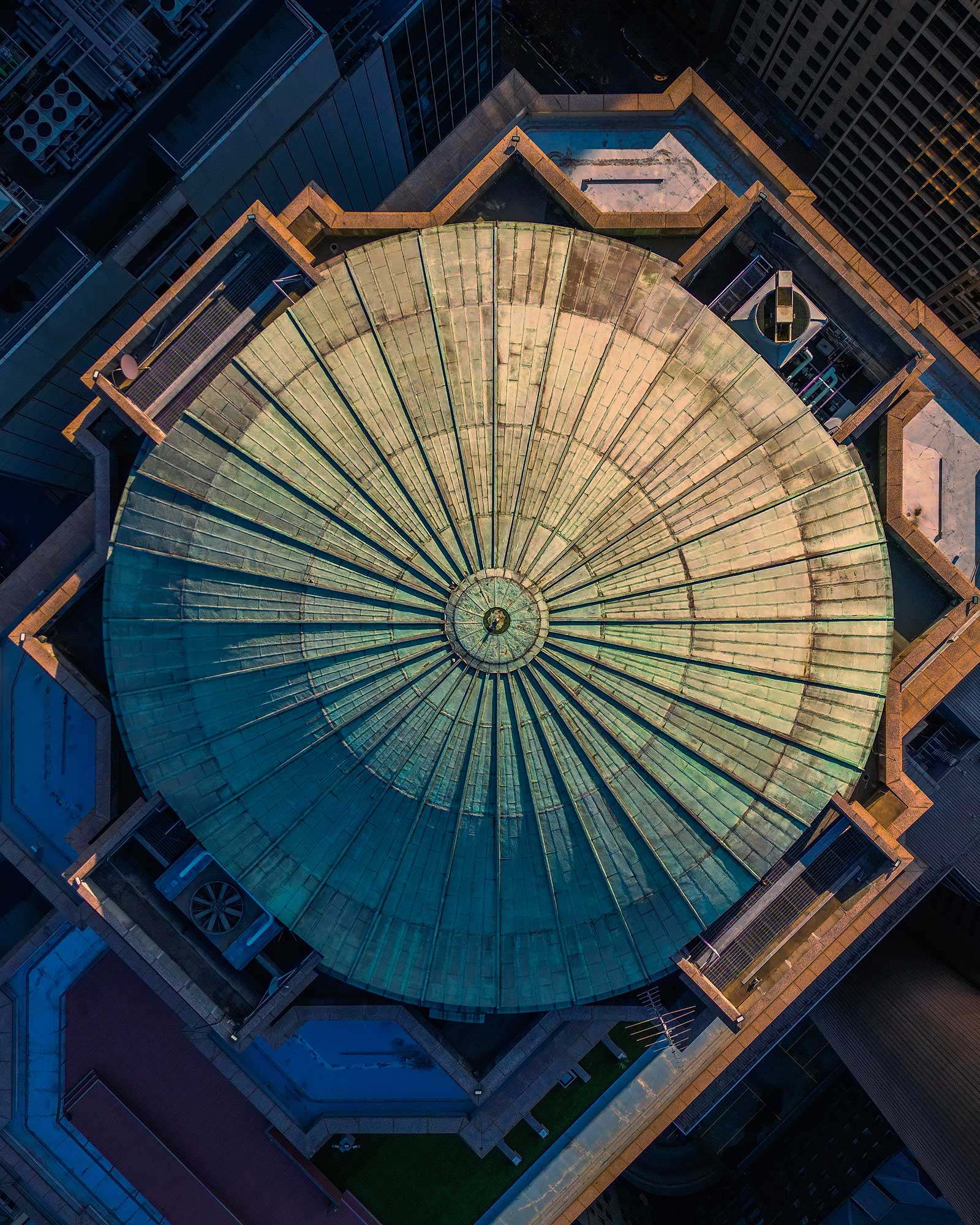
Aerial photography turns this up further because the view is familiar and impossible at once. Everyone knows Collins Street; almost nobody has seen the copper dome on top of number 333, because it's only visible from 400 feet. The image reads instantly as home and simultaneously as somewhere you've never been. That tension is what keeps a photograph interesting on year three, long after a generic print has gone invisible.
"Local" also means something practical
A stock canvas is a licensing transaction: an image bought in bulk, printed offshore, drop-shipped in a tube. Local photography, mine or any other Melbourne artist's, comes with a person attached. You can ask how the shot was made and get an actual answer. You can email about which size suits your wall and get advice instead of a chatbot. If something arrives damaged, a human whose name is on the work sorts it out.
It changes the object's status too. A stock canvas is one of tens of thousands of identical copies; a print like this is produced individually to order, by the person who shot it, for the wall it's going to hang on. Whether that matters is a personal question, but people who own prints with a story attached consistently report the same thing: they look at them more.
How to choose well, wherever you buy
Buy images of places you have a real relationship with. The suburb you live in, the city you chose, the coastline of your summers. Prioritise photographs or artworks where you can name what's specifically yours about them.
Check the substrate before the image. Archival pigment printing on cotton rag paper survives decades; cheap canvas and dye prints fade in a west-facing room within a few years. The words to look for are "giclée", "pigment ink", and "archival paper". If a seller can't tell you the paper stock, that's the answer.
And size honestly. An undersized print is the most common wall art mistake in Melbourne homes, and I wrote a separate guide on getting it right. A local image at the correct scale beats an imported one at any scale, but a local image at the correct scale is the actual goal.
Melbourne has no shortage of photographers, printmakers, and painters making work about this specific city. Mine is one small collection of it, aerial, limited, and printed properly. Wherever you land, hang something of your own city. The Eiffel Tower doesn't miss you.
The collection is small and local: aerial prints of Melbourne, made to order on archival paper.
Browse the Collection