Melbourne CBD · ~400ft / 122m
Fine Art Print
Floating Over Melbourne
Sunrise over the city, 400ft up.
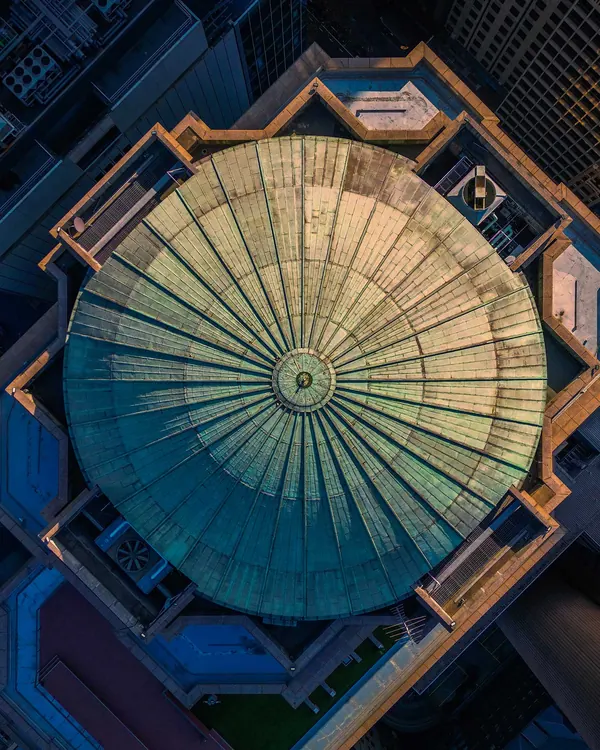
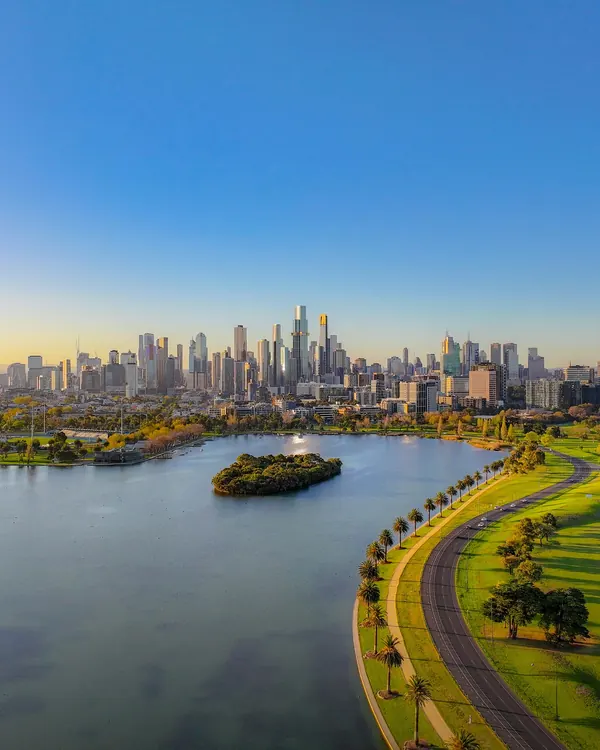
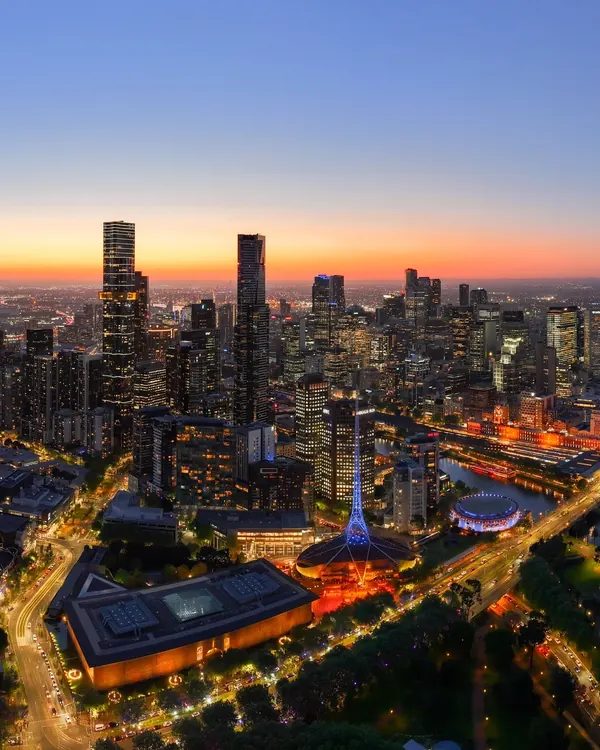
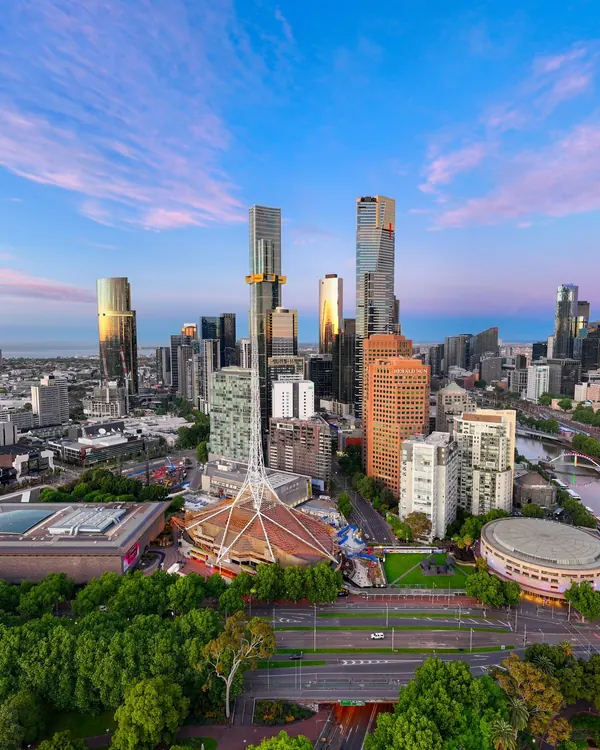
On a clear autumn morning, Melbourne's balloon operators launch from Flagstaff Gardens at first light. Photographed from a drone flying alongside at altitude, this image captures the rare scale of the balloons against the downtown skyline — a perspective impossible from the ground and difficult to plan.
- Location
- Melbourne CBD
- Altitude
- ~400ft / 122m
- Camera
- DJI Mavic 3 Pro — Hasselblad 4/3 CMOS
- Paper
- Hahnemühle Photo Rag 308gsm
- Available Sizes
- A4 · A3 · A2 · A1 · A0
- Price
- From A$41 AUD
- Availability
- Printed to order
Questions? Contact me directly about sizes, framing, or custom orders.
The shot
Launched at 5:20am and holding at around 100 metres by 5:35, watching an empty sky. The balloons came up at 5:52, just as the pre-dawn indigo started going gold at the horizon. It was -8°C that morning, which knocks roughly 12% off the drone's rated battery life: two batteries, one ground swap, about 75 minutes of flight time for a twenty-minute window.
The lesson that made the frame possible was learned on the attempts that failed — launch first and wait at altitude. Wait until you see the balloons go up and you burn the first ten minutes of battery climbing while they are at peak height, and by the time you are in position they are already coming down.
Why this frame is difficult to get
Melbourne is one of the only cities in the world where commercial hot air balloons fly directly over the CBD. The catch is in the conditions. Balloon operators only launch in light wind, clear sky and stable air, and that same calm tends to come with a low-level inversion that traps haze over the city and flattens the light. The mornings you can fly are very often the mornings not worth flying.
Timing narrows it again. Operators launch around civil twilight and the flight lasts about an hour, but the stretch where the balloons are aloft and the sun is still low enough to give proper colour is roughly twenty minutes. This took four attempts across two winters; the full account is in the journal.
What the print shows
In the first half hour after sunrise the CBD's east-facing glass acts as a field of mirrors, and the Collins Street towers — each facing a slightly different direction — flicker in and out of reflection minute by minute. Slightly backlit, the balloon envelopes read in silhouette while the burner flashes register warm orange against a cool sky.
From close to 400 feet the balloons sit in the lower quarter of the frame and work as a scale reference: objects of known size set against the CBD grid, with the Yarra to the south and the bay just visible past Port Melbourne. A city that feels dense and compressed at street level turns out, from above, to be a handful of objects in an enormous amount of space.
Sizing and framing this image
This one depends on the balloons reading as objects rather than dots, so it is the print in the collection that gains the most from scale. A1 is the smallest size at which the burner detail and the reflected tower faces hold together properly; A0 on a dedicated wall is where it belongs.
The palette is warm against a cool sky, which gives frame choice more latitude than the darker city images. Sizes and viewing distances are worked through in the size guide, and frame, mat and placement in the framing guide.
Print terms, defined
- Giclée print
- A giclée print is a print made with pigment-based inks rather than dyes, laid down by a large-format printer at high resolution. Pigment inks sit in the paper instead of soaking through it and are rated for well over a century of colourfastness, which is the difference between a fine art print and a poster-shop print that fades visibly in years.
- Hahnemühle Photo Rag 308gsm
- Hahnemühle Photo Rag 308gsm is a 100% cotton rag paper from a German mill that has made paper since 1584. It is matte, heavy and slightly textured, which lets dark tones sit flat and quiet rather than turning the surface into a mirror — the reason it suits city-at-dusk images, which live or die on their shadows.
- Made to order
- A made-to-order print is produced individually once it is ordered — printed, proofed and shipped as a one-off run rather than pulled from warehouse stock. Every print in this collection is made this way and checked against the current printer profile before it ships. They are open prints, not numbered limited editions.
- A4
- A4 is 210 × 297mm (21 × 29.7cm), about the size of a magazine page. It suits a picture ledge, a desk, or a cluster of several prints hung together. It is one step on the ISO 216 A-series, where each size is half the area of the one above it.
- A3
- A3 is 297 × 420mm (29.7 × 42cm). Like A4 it works at close range and in groups, and it is the low-risk way to live with an image before committing to it at scale.
- A2
- A2 is 420 × 594mm (42 × 59.4cm), roughly a movie poster, with a 73cm diagonal. It is the most flexible size on a wall: corridors, home offices, and the wall at the foot of a bed.
- A1
- A1 is 594 × 841mm (59.4 × 84.1cm), with a 103cm diagonal. It is the size recommended most often for living rooms: above a sofa, sideboard or bed it anchors the wall without dominating the room.
- A0
- A0 is 841 × 1189mm (84.1 × 118.9cm), the largest standard A-series size, with a 146cm diagonal. It is a genuine large-format print that wants a dedicated wall and two to three metres of viewing distance.
Common questions
How are these prints made?
Each one is a giclée print: pigment-based inks rather than dyes, laid down by a large-format printer at high resolution onto Hahnemühle Photo Rag 308gsm, a 100% cotton rag paper. Pigment inks sit in the paper instead of soaking through it and are rated for well over a century of colourfastness. Prints are made to order, proofed, and checked against the current printer profile before they ship. The full production process is documented in the journal.
What sizes is this print available in, and what do the dimensions mean?
Floating Over Melbourne is available in A4 (21 × 29.7cm), A3 (29.7 × 42cm), A2 (42 × 59.4cm), A1 (59.4 × 84.1cm), A0 (84.1 × 118.9cm). Those labels come from the standard A-series, which doubles in area at each step up — A4 is about a magazine page, A2 roughly a movie poster, and A0, at 84.1 × 118.9cm, the largest standard size. Framing adds to all of these — a matted, framed A1 becomes roughly 80 × 105cm on the wall — so compare framed sizes against your space, not paper sizes. The print size guide works the choice backwards from your viewing distance.
How should I frame it?
Matte black is the gallery standard and the safe answer, because it disappears against a dark image rather than competing with it; oak and white both work in the right interior. A mat border of 8 to 10cm keeps the print surface off the glass, which matters over years, and grows the framed piece accordingly. If the wall takes direct sun, choose a matte surface and skip glass-fronted frames. The framing guide covers frame colour, matting, and placement in detail.
How long until it arrives, and where do you ship?
Allow 5 to 7 business days for printing and quality control before dispatch, then 2 to 4 business days to Australian metropolitan areas and up to 7 to regional and remote areas. Shipping within Australia is free and tracked, and prints travel rolled in acid-free tissue inside heavy-duty crush-resistant tubes. Orders currently ship within Australia only. Full detail is on the shipping policy page.
Is this an open or limited edition?
It is an open print, made to order. Prints are not numbered or released in limited editions — each one is produced individually when it is ordered rather than pulled from a pre-printed run held in a warehouse. That also means every copy is checked against the current printer profile on the day it is made.
Where was Floating Over Melbourne shot?
Over the Melbourne CBD at sunrise, from a launch point in a park north of the city. The balloons in frame had come up from the Flagstaff Gardens area at 5:52am; the drone was already holding at altitude, close to 400 feet, waiting for them.